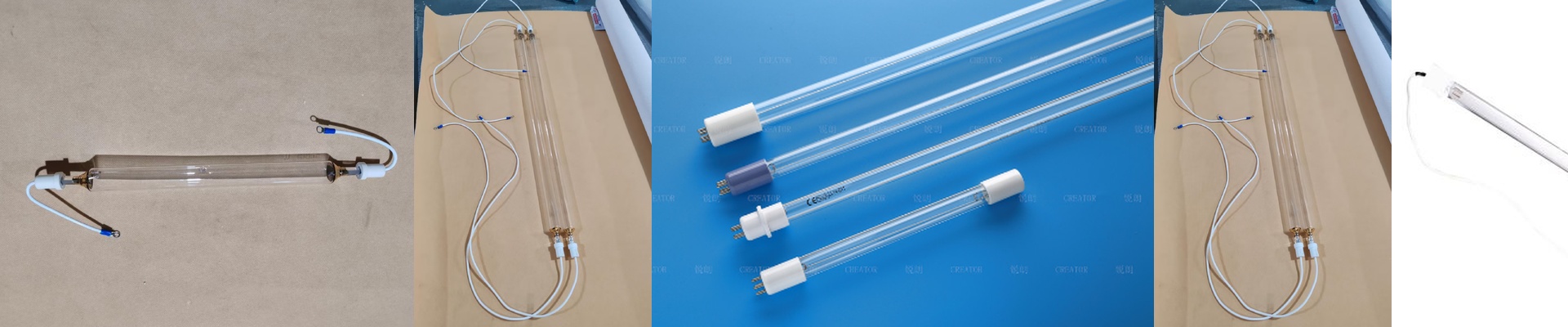
Stop Treating Your UV Lamps Like Spare Parts
Most people shopping for UV lamps in China are just hunting for a cheap drop-in replacement. They want something that fits the slot and doesn’t break the bank. But here’s the thing: a lamp isn’t just a part. It’s the heart of your entire curing process. If your ink still feels tacky or your substrates are warping, you don’t necessarily need a “better” lamp. You probably have a mismatch between what the lamp is putting out and how fast your line is moving.
The actual science of the “cure”
Curing is all about getting the right amount of light—photons, specifically—into the photoinitiators in your ink. We don’t just guess. We look at the irradiance (the W/cm²) and the specific wavelength you need. Some jobs need short-wave light to get that hard surface finish, while others need longer wavelengths to make sure the ink is cured all the way through to the bottom. And a word of warning on power: don’t try to cheat the system. Pushing a lamp past its rated voltage to squeeze out more speed is a trap. Sure, you’ll see a boost for a few days, but you’re basically frying the electrodes. You’ll kill the lamp’s lifespan just to save a few seconds per sheet. Not a great trade.
Dealing with the heat
UV lamps get hot. Really hot. If your cooling system can’t keep up with that heat load, things go south quickly. You might see your materials deform, or worse, you get “skinning.” That’s when the top looks perfect, but the bottom is still liquid. It’s a nightmare to find until it’s too late. We can help you figure out exactly how much airflow or water-cooling you actually need so your footprint stays stable and your product stays flat.
Getting the process right
We aren’t just shipping tubes in a box. We want to know about your conveyor speed and how thick your ink is. Seeing “orange peel” textures? Bad adhesion? That usually means your UV dose is off. Instead of guessing, we’ll work with you to tweak the lamp height and the angle of the reflectors. The goal is to get a steady, uniform intensity across the entire web. Once that’s dialed in, the guesswork disappears and your production line just… works.